Masala Dosa Calories & Protein
A masala dosa plate — the crisp dosa with its spiced potato filling, a bowl of sambar and coconut chutney on the side — scans at an estimated 620 calories and 15g of protein. Below is the full itemised breakdown from the actual GLPFork scan of one typical plate, so you can see exactly where those numbers come from.
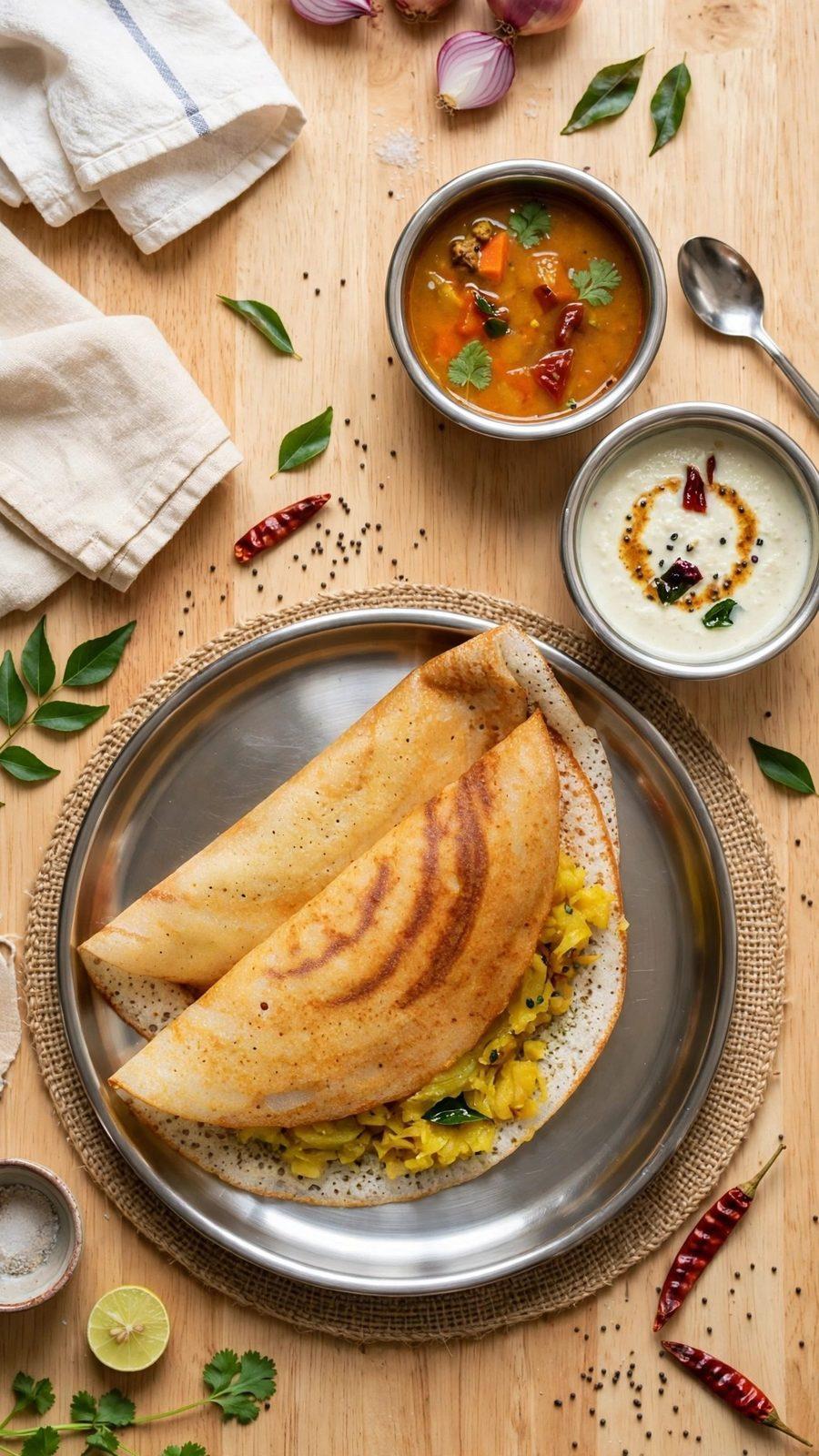
AI estimate from one typical plate we scanned:
| Item | Portion | Protein | Calories | Carbs | Fat |
|---|---|---|---|---|---|
| Masala Dosa | 220g | 7g | 350 kcal | 55g | 11g |
| Sambar | 150g | 5g | 110 kcal | 16g | 4g |
| Coconut Chutney | 80g | 3g | 160 kcal | 6g | 15g |
| Total | 15g | 620 kcal | 77g | 30g |
What the scan tells you
- The coconut chutney is the quiet calorie trap: 160 calories in a small 80g side bowl — more than the sambar — and 15g of the plate's 30g of fat comes from it alone.
- Protein is modest on this plate. The sambar quietly contributes a third of it (5g of 15g), thanks to the lentils.
- The dosa itself is carb-led: 55g of the plate's 77g of carbs sit in the dosa and its potato filling.
GLP-1 note
If you're eating smaller portions as part of a GLP-1 journey, protein is usually the number to watch — and this plate is carb-led, at about 2.4g of protein per 100 calories. Many people round a dosa out with a protein-rich extra on the side, like a boiled egg or a yogurt-based raita, so the meal keeps them full for longer.
Frequently asked questions
How many calories are in a masala dosa?
The full plate we scanned — dosa with potato filling, sambar and coconut chutney — came to an estimated 620 calories. The dosa on its own was 350 calories; the chutney and sambar made up the rest.
How much protein is in a masala dosa?
An estimated 15g of protein for the whole plate: 7g from the dosa, 5g from the sambar and 3g from the coconut chutney.
How accurate are these numbers?
They are an AI estimate generated from a photo of one typical plate, so treat them as a helpful guide rather than an exact measure. Your plate will vary with portion size, recipe, and how much oil or ghee is used. Always verify anything that matters for an important dietary decision.
Scan your own plate free — no signup.
Snap a photo of your meal and GLPFork's AI will estimate its calories, protein, carbs and fat, item by item — just like the scan on this page. Your first scan is free.
Scan my meal freeNutrition information is AI-generated and may be inaccurate. GLPFork does not provide medical advice, diagnose conditions, recommend medication or dosage changes, or identify food allergens. Always verify important dietary information independently.