Dal Tadka, Roti & Sabzi Calories & Protein
A home-style plate of dal tadka, two rotis and mixed vegetable sabzi scans at an estimated 505 calories and 18g of protein — the lightest full plate in our scan series so far. Here is the itemised breakdown from the actual GLPFork scan.
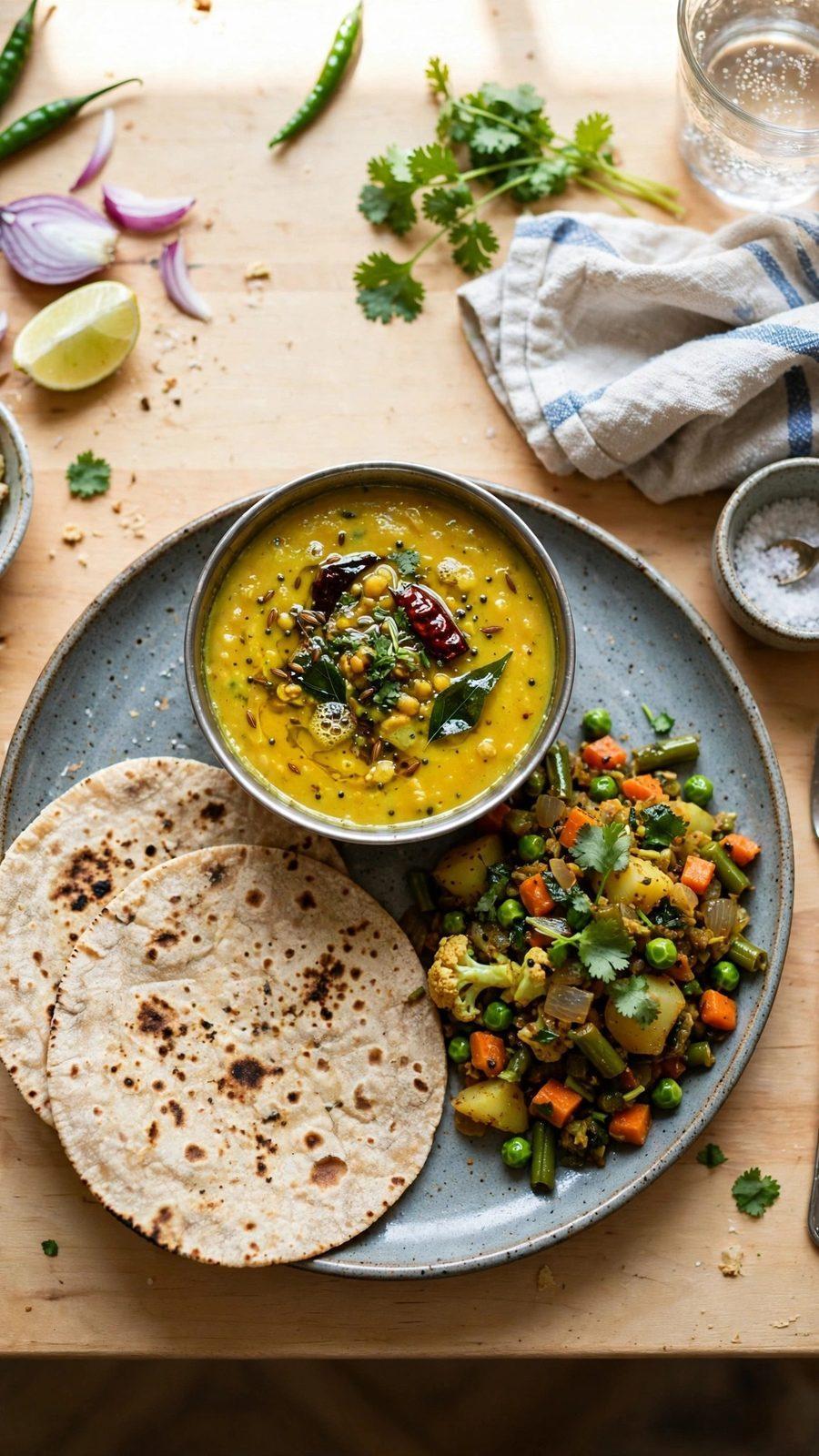
AI estimate from one typical plate we scanned:
| Item | Portion | Protein | Calories | Carbs | Fat |
|---|---|---|---|---|---|
| Dal Tadka (Yellow Lentil Curry) | 190g | 8g | 165 kcal | 23g | 5g |
| Roti / Chapati | 80g | 6g | 210 kcal | 40g | 3g |
| Mixed Vegetable Sabzi | 150g | 4g | 130 kcal | 17g | 5g |
| Total | 18g | 505 kcal | 80g | 13g |
What the scan tells you
- The rotis are the calorie centre of this plate: 210 calories — more than the dal itself — and 40g of the plate's 80g of carbs. The second roti is where this meal grows.
- The dal does double duty: it's the top protein source (8g) at only 165 calories, with the lentils bringing fibre along too.
- Fat stays low across the whole plate (13g total) — a heavier hand with the ghee tempering is the one place that number would climb.
GLP-1 note
At roughly 3.6g of protein per 100 calories, this is a genuinely balanced everyday plate — the lentils give it a protein-and-fibre base that tends to keep people satisfied on smaller portions. It's a good template for what a protein-aware home meal can look like without trying hard.
Frequently asked questions
How many calories are in a dal and roti meal?
The plate we scanned — dal tadka, two rotis and mixed vegetable sabzi — came to an estimated 505 calories. The rotis were the biggest single contributor at 210 calories.
How much protein is in dal and roti?
An estimated 18g of protein for the plate: 8g from the dal tadka, 6g from the rotis and 4g from the sabzi.
How accurate are these numbers?
They are an AI estimate generated from a photo of one typical plate, so treat them as a helpful guide rather than an exact measure. Your plate will vary with portion size, recipe, and how much oil or ghee is used in the tempering. Always verify anything that matters for an important dietary decision.
Scan your own plate free — no signup.
Snap a photo of your meal and GLPFork's AI will estimate its calories, protein, carbs and fat, item by item — just like the scan on this page. Your first scan is free.
Scan my meal freeNutrition information is AI-generated and may be inaccurate. GLPFork does not provide medical advice, diagnose conditions, recommend medication or dosage changes, or identify food allergens. Always verify important dietary information independently.